Staffing WC Consulting
PCI places and actively manages staffing workers’ comp, A+ rated carrier policies, clean class-code splits, claims we handle directly, and return-to-work planning for temp, PEO, healthcare, and industrial staffing operators.

Staffing agencies in New Hampshire carry the workers’ comp claim for every worker they place, even when the injury happens at a client’s nursing home, warehouse, or job site. PCI Consultants places coverage through A+ rated carriers and then manages the claim directly: you call us, not the insurer. We build day-one medical records, correct inflated class codes, contest exaggerated claims, and move people to light duty in weeks, so a single injury doesn’t turn into years of higher premium. Built for agencies with 100+ employees and $100K+ in annual spend.
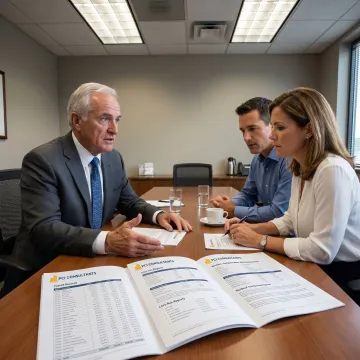
Hands-on workers’ compensation consulting for staffing agencies that want lower real cost, cleaner audits, and claims someone actually manages.
PCI places and actively manages staffing workers’ comp, A+ rated carrier policies, clean class-code splits, claims we handle directly, and return-to-work planning for temp, PEO, healthcare, and industrial staffing operators.
We review staffing payroll, client-assignment data, job descriptions, and NCCI allocations to find mispriced premium, separating clerical, healthcare, warehouse, and driver payroll so you stop overpaying on low-risk roles.
For qualifying high-premium agencies, PCI structures programs where you retain a defined first layer (e.g. the first $200K of $500K) through A+ carriers, often roughly halving underwriting premium. Not every business qualifies.
We audit loss runs, reserves, open claims, and mod drivers to relieve experience-modification pressure, because once premium rises after a claim, it rarely comes back down on its own.
Our in-house team monitors claims with proprietary software, pays genuine injuries without dispute, contests exaggerated ones, and corrects the inflated ‘lawyer number’ down to real, incrementally paid cost.
PCI builds transitional light-duty plans, an injured nurse moved to a receptionist-type role within weeks, to cut indemnity duration and protect your long-term loss ratio.
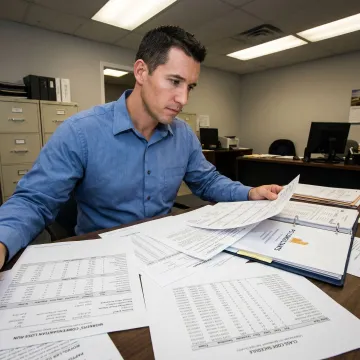
We start with a 30-minute call and your current policy, payroll, five-year loss runs, class-code schedule, and renewal timing. For a New Hampshire staffing agency, the first question is simple: is your premium level and loss ratio inflated enough to justify restructuring the program?
PCI Consultants combines program design, direct claims handling, and underwriting strategy to lower your real workers’ compensation cost.
Over 30 years structuring and managing complex staffing workers’ comp programs, not just placing the policy, but running the claim for its full life.
Coverage is placed through A+ rated carriers such as Travelers and other approved underwriters, with high-deductible options for qualifying agencies.
New Hampshire agencies benefit from clean payroll splits and accurate NCCI classifications, so clerical placements aren’t rated like high-risk floor roles.
You call us, not the insurer. We build day-one medical records, contest exaggerated claims, and move people to light duty to keep your mod down.
Experienced leadership for complex workers’ compensation programs.

CEO
Michael Sobel is the CEO of PCI Consultants LLC, bringing over 30 years of experience across both public and private sectors in workers compensation insurance and risk management. He is the driving force behind the firm's client relationships, facilitating seamless communication between clients, customers, and businesses to achieve measurable objectives. Michael's expertise spans management consultation, team building, professional development, strategic implementation, and company collaboration. He is deeply involved in the hands-on development of risk models covering market, credit, and operational risk, ensuring that internal controls operate effectively while providing ongoing research and analytical support. Michael's leadership has helped PCI Consultants grow to over 80 active programs, delivering substantial premium savings and long-term value to organizations across the country.
Yes. Because your agency is the employer of record for every worker you place, the workers’ comp claim is yours even when the injury happens at a client’s nursing home, warehouse, or job site. That is exactly why the way a claim is handled matters so much for staffing operators. When one of your placed workers is hurt, PCI Consultants steps in directly, you call us, not the insurer, and we evaluate the incident immediately, often sending the injured worker to urgent care the same day so there is an accurate, timestamped medical record. That early record is what protects you months later if the injury gets exaggerated. From there we manage class-code accuracy, claims, and premium the whole life of the policy.
Get straight answers about your staffing agency’s workers’ comp, and what your premium should actually be.

Policies issued through respected A+ rated insurers.
Led by decades of risk management experience.
Managing substantial workers compensation programs nationwide.
Book a 30-minute policy and claims review. Send over your current WC policy and five-year loss runs, and we’ll show you where your premium is inflated and whether a high-deductible structure fits your agency.
For immediate assistance, feel free to give us a direct call at 917-613-8580.
For immediate assistance, feel free to give us a direct call at 917-613-8580.